
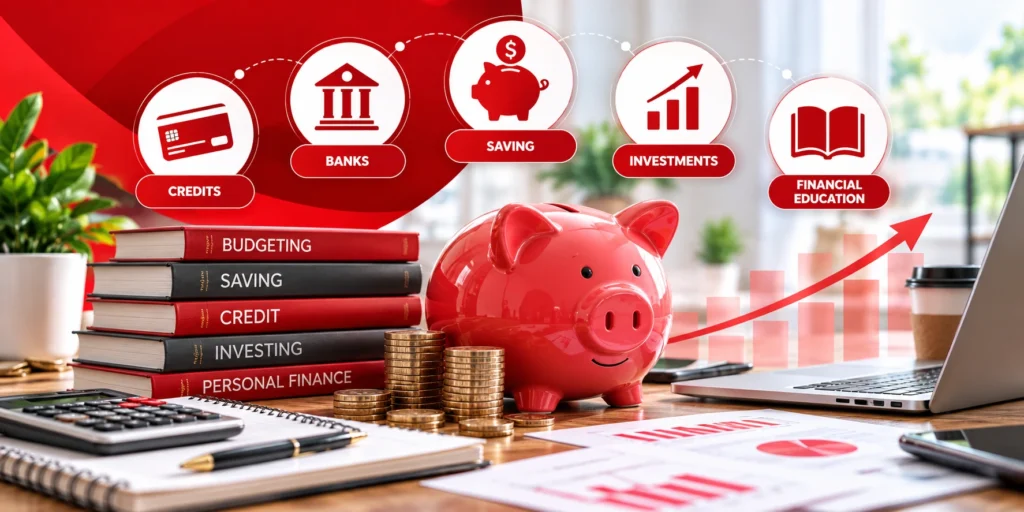
Financial education helps people understand how money works and how everyday decisions can affect their financial stability.
Learning basic concepts such as budgeting, saving, credit, debt and investing can make personal finances easier to manage.
What is Financial Education?
Financial education is the process of learning how to manage income, expenses, savings, credit and other financial responsibilities.
The goal is not to become a financial expert, but to understand the basic tools needed to make more informed money decisions.
5 Basic Areas of Personal Finance
Income
Understanding how much money comes in each month is the starting point for planning expenses and savings.
Budgeting
A budget helps organize regular expenses, priorities and financial goals.
Saving
Saving can help prepare for emergencies, future purchases and unexpected costs.
Credit
Credit can be useful, but understanding interest rates, payments and debt is important before using it.
Investing
Investing involves using money with the goal of potential future growth, while also accepting different levels of risk.
How to Build a Simple Budget
A simple budget can provide a clearer picture of monthly finances. It does not need to be complicated.
Calculate monthly income
Add the regular income received during the month.
List essential expenses
Include housing, utilities, food, transportation and other recurring costs.
Review non-essential spending
Identify purchases that can be reduced if necessary.
Set a savings goal
Choose an amount that fits realistically within the monthly budget.
Why an Emergency Fund Matters
Unexpected expenses can happen at any time, including repairs, medical bills or temporary loss of income.
An emergency fund is money kept separately for situations that were not part of the regular budget.
Understanding Credit and Debt
Credit allows people to borrow money and repay it over time. The total cost can depend on the interest rate, fees and repayment period.
Debt becomes more difficult to manage when payments take up a large part of monthly income or when interest continues to accumulate.
Credit Cards
Reviewing interest rates, due dates and minimum payments can help prevent unnecessary costs.
Loans
Loan terms can include fixed or variable rates, fees and different repayment schedules.
Saving vs. Investing
Saving and investing serve different purposes. Savings are generally used for short-term goals or emergencies.
Investments are usually associated with longer-term goals and can involve the possibility of both gains and losses.
Common Financial Mistakes
- Spending without tracking monthly expenses.
- Using credit without understanding interest.
- Not keeping money for emergencies.
- Ignoring recurring subscriptions or small expenses.
- Making financial decisions without comparing options.
Simple Ways to Improve Financial Habits
Small adjustments can make a noticeable difference over time.
Rates, fees and conditions can vary between providers.
Financial goals are easier to maintain when they fit the available income.
Financial products and conditions can change, so updated information matters.
Frequently Asked Questions
It can help people better understand budgeting, credit, debt, savings and financial products.
No. The amount that can be saved depends on personal income, expenses and financial priorities.
No. Saving generally focuses on preserving money, while investing usually involves risk in exchange for potential growth.
No. Financial institutions may evaluate multiple factors before approving any credit product.
Keep Learning About Personal Finance
Financial education is an ongoing process. Understanding the basics can make it easier to evaluate future financial decisions.